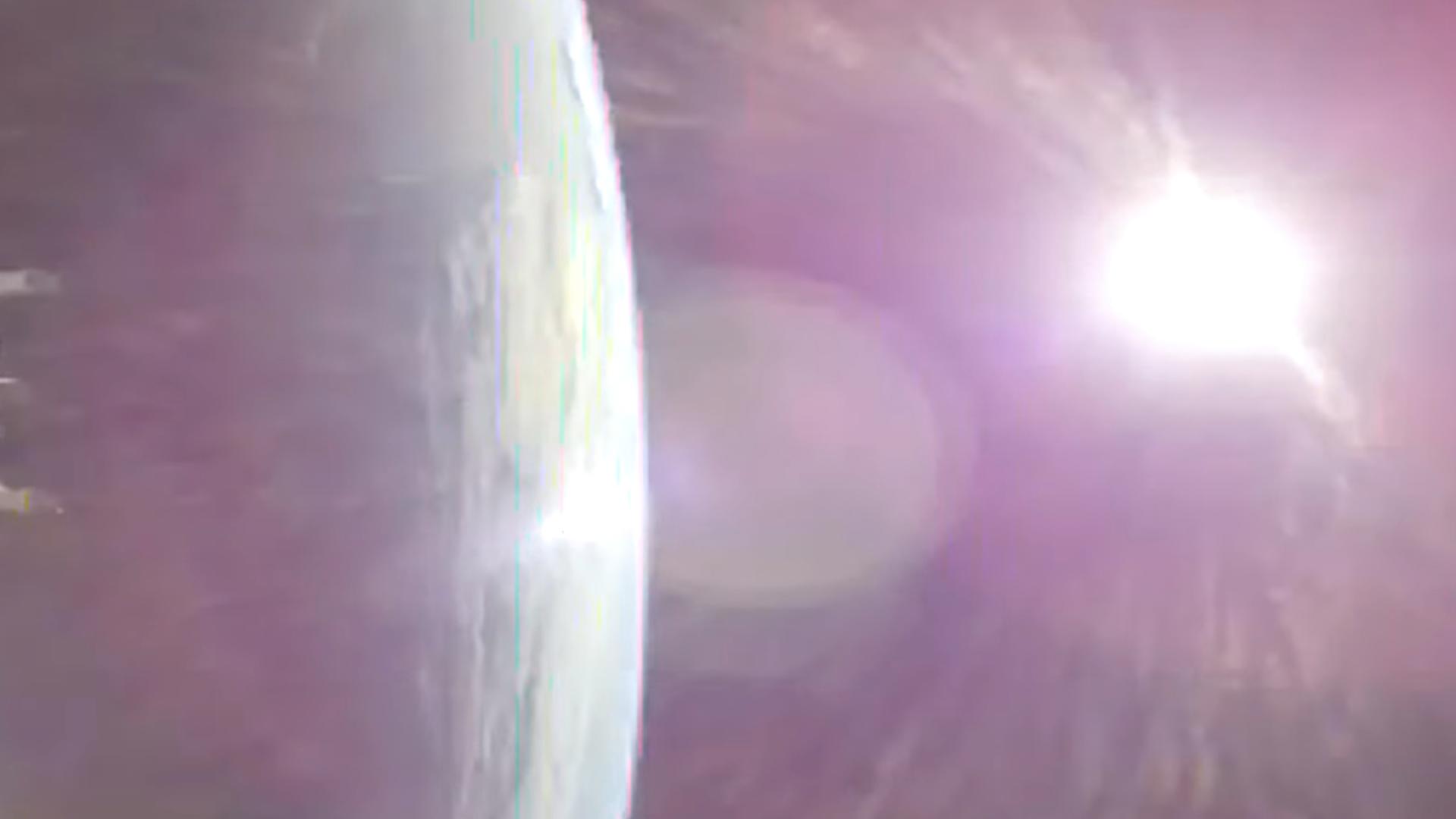

Artemis II: A New Perspective on Earth's Beauty
The Artemis II mission has not only pushed the boundaries of human space exploration but also gifted us with some of the most stunning images of our planet ever taken. As astronauts leave Earth en route to the moon, they've snapped high-resolution photos revealing the vibrant blue hues of our world, as well as breathtaking green auroras swirling across the atmosphere.
The Role of Technology in Capturing Earth From Space
Photographing Earth from space isn't as simple as pointing a camera out the window. It requires advanced imaging equipment, careful planning, and a deep understanding of lighting and motion. The Artemis II crew used state-of-the-art cameras designed to operate in the harsh conditions of space, where extreme temperatures and radiation can affect standard electronics.
These high-resolution cameras are capable of capturing fine details even from thousands of kilometers away. The resulting images show not only the familiar blue oceans and white clouds but also the glowing green of auroras—natural light displays produced by particles from the sun interacting with Earth's magnetic field.
Why Are These Images Important?
Beyond their beauty, these photographs serve several purposes. For scientists, they provide valuable data about Earth's atmosphere, weather patterns, and even climate change. For educators and tech enthusiasts, they offer a chance to see our planet as astronauts do, sparking curiosity about space technology and remote sensing.
The images also remind us of the fragility and uniqueness of life on Earth. Seeing our planet as a small orb in the vastness of space can inspire a sense of unity and responsibility to protect our home.
How Space Photography Works: Skills for Tech Learners
Behind every jaw-dropping photo from Artemis II lies a blend of skills that are highly valuable in today's tech landscape:
- Digital imaging: Understanding how light, sensors, and optics interact is crucial for capturing clear images in challenging conditions.
- Data transmission: Sending high-resolution images from space requires robust communication systems and data compression techniques.
- Image processing: Raw photos from space often need to be processed and enhanced using software tools, a skill set that overlaps with fields like computer vision and machine learning.
What This Means for Beginners
If you’re new to tech and fascinated by space, the Artemis II mission shows how interdisciplinary skills come together to achieve remarkable feats. You don’t need to be an astronaut to contribute—learning about digital photography, data science, or remote sensing can lead to careers in aerospace, environmental science, and beyond.
Many of the technologies used in space exploration have applications here on Earth, from climate monitoring to navigation systems. By building foundational skills in programming, electronics, or image analysis, you can be part of the next wave of innovation.
How to Start Learning Space Imaging Technology
- Explore online courses in digital photography, remote sensing, or satellite communications.
- Experiment with open-source image processing tools like GIMP or OpenCV to understand how raw images are enhanced.
- Stay curious about current space missions—following NASA or ESA updates can keep you inspired and informed about the latest tech advancements.
3 Practical Takeaways for Aspiring Tech Learners
- Interdisciplinary skills matter: Combining knowledge from different tech fields can lead to exciting new possibilities, both in space and on Earth.
- Start with small projects: Practice image analysis or digital photography with equipment you have; the principles are universal.
- Stay inspired by real missions: Following space exploration keeps you connected to the bigger picture and helps you see the impact of tech on our understanding of the universe.
Want to read more?
This is a summary of the article. You can read the full story on the original publisher's website.
Read Full Article