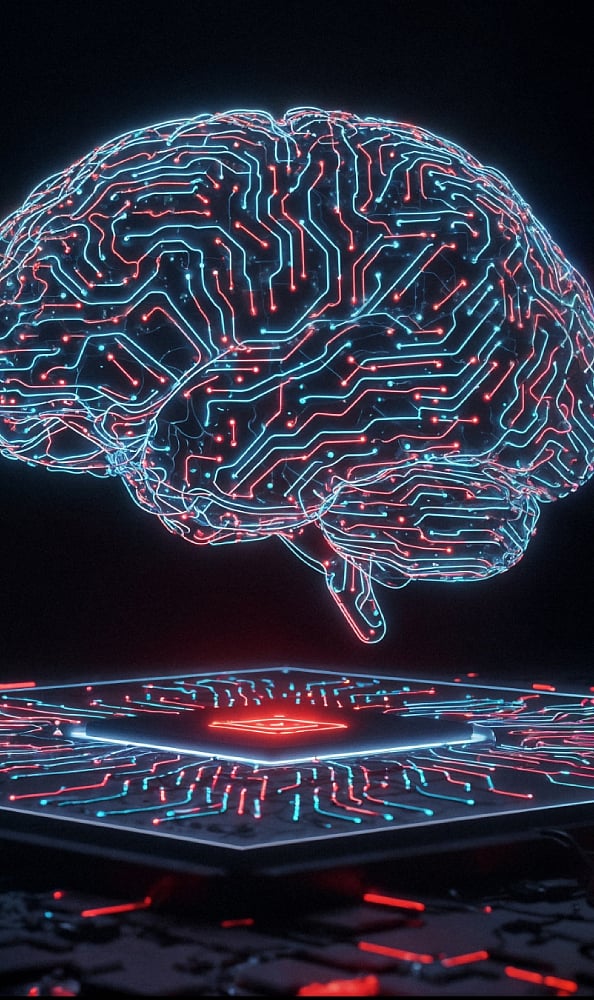
The Expert Take: Neuromorphic Computing’s Career-Defining Disruption
In our experience training engineers for frontier AI roles, few innovations have generated as much excitement—and confusion—as neuromorphic computing. Having guided hands-on projects at the intersection of hardware and AI, we’ve seen how brain-inspired chips are challenging the way developers think about code, architecture, and efficiency. Neuromorphic computing isn’t just another buzzword; it’s resetting the expectations for how fast, power-efficient, and adaptable intelligent systems can be. For those ready to future-proof their careers, this is a trend you can’t afford to ignore.
What Happened & Why It Matters
Neuromorphic computing refers to designing hardware and algorithms that mimic the structure and function of the human brain—primarily using artificial neurons and synapses. Recent research and commercial efforts (such as Intel’s Loihi 2 chip and IBM’s TrueNorth architecture) are pushing these concepts from the lab into real-world applications. Unlike traditional CPUs and GPUs, neuromorphic systems process information with massively parallel, event-driven architectures—closer to how our brains operate. This shift enables AI to run on edge devices with drastically lower power requirements—sometimes as much as 100x more efficient than standard architectures, according to Nature Electronics.
Why does this matter for tech learners? Because neuromorphic hardware is unlocking applications previously limited by power, speed, or data constraints. Think always-on smart sensors, real-time robotics, and AI that fits in your pocket. As companies race to deploy intelligent systems in resource-constrained environments (from autonomous vehicles to medical devices), the demand for engineers who understand neuromorphic principles is about to explode.
The Technical Reality: What Engineers Need to Know About Neuromorphic Computing
To understand the technical impact of neuromorphic computing, you need to grasp how it diverges from conventional digital architectures. Traditional processors (CPUs/GPUs) use the von Neumann architecture, where memory and computation are separate and data shuttles back and forth on buses—causing the well-known von Neumann bottleneck. Neuromorphic chips, in contrast, integrate memory and processing within artificial neurons and synapses, inspired by biological neural circuits.
For example, Intel’s Loihi 2 leverages spiking neural networks (SNNs), where computation happens through discrete spikes—just like neurons firing in the brain. Rather than continuous values, SNNs operate on events, making them inherently event-driven and asynchronous. This allows for massive parallelism and ultra-low-power operation, especially in real-time scenarios like gesture recognition or anomaly detection on edge devices.
Here’s a conceptual code comparison:
- Traditional deep learning (PyTorch/TensorFlow):
output = relu(Wx + b) - Neuromorphic/SNN:
if membrane_potential > threshold: emit_spike()
Most mainstream AI frameworks (like PyTorch and TensorFlow) are built for dense matrix operations, not event-driven spikes. That’s why specialized tools like Brian2, Nengo, and Intel’s Lava are gaining traction for SNN development. These tools help you architect and simulate networks that more closely resemble biological processes.
Another key distinction is in learning algorithms. While backpropagation rules the deep learning world, neuromorphic systems often use local learning rules like Spike-Timing Dependent Plasticity (STDP), Hebbian learning, or bio-inspired online adaptation. Implementing these requires not just new code, but a shift in thinking: you’re designing systems that adapt in real-time, not just train once and deploy.
Architecturally, neuromorphic chips are also scaling up: Loihi 2 boasts over 1 million neurons on a single chip, and research prototypes are pushing even higher. Engineers must wrestle with issues like spike routing, noise tolerance, and hardware-in-the-loop simulation. Deploying these systems is far from plug-and-play; it demands a blend of neuroscience, embedded systems, and AI expertise.
Lastly, neuromorphic computing’s event-driven nature makes it well-suited for time-series data and sensory streams—think robotics, IoT, bio-signals. But the field is still nascent: interoperability with existing AI pipelines, model conversion, and large-scale deployment are active research areas. You’ll find more open questions than answers, which is exactly why early expertise is so valuable right now. For more on the technical underpinnings, see NVIDIA’s developer blog.
Why This Directly Impacts Your Tech Career
For software engineers, data scientists, and embedded systems specialists, neuromorphic computing is poised to be a career-defining wave. As companies like Intel, IBM, and startups such as SynSense and BrainChip commercialize neuromorphic chips, there’s a massive skills gap: few engineers have hands-on experience with SNNs, bio-inspired algorithms, or the specialized toolchains required. If you’re looking to stand out in the AI or hardware sectors, neuromorphic know-how offers a unique competitive edge.
Expect a surge in demand for roles related to edge AI, robotics, smart sensors, and real-time analytics. Job titles like Neuromorphic Software Engineer, Embedded AI Developer, and Spiking Neural Network Researcher are already appearing in advanced R&D labs and growing startups. Over the next 12-24 months, you’ll see industries such as automotive (autonomous vehicles), healthtech (wearable diagnostics), and industrial IoT (predictive maintenance) aggressively hiring for these skills.
Compensation reflects the rarity and impact of these capabilities. According to recent postings on LinkedIn, neuromorphic-focused roles in Silicon Valley and Europe start at $140,000 and can exceed $200,000+ for interdisciplinary experts. Even if you’re early in your career, hands-on neuromorphic projects and open-source contributions can set you apart from traditional ML engineers. At Support Me Techs, we’ve seen students land interviews at top labs and startups after showcasing small-scale SNN demos or custom edge AI projects.
Skills You Should Build Right Now
- Spiking Neural Networks (SNNs): Neuromorphic chips rely on SNNs instead of traditional artificial neural networks. This news signals a strong shift toward SNN expertise. Start with the NEST or Brian2 simulator and implement basic spiking neuron models.
- Neuromorphic Hardware Programming (Loihi, TrueNorth): Understanding how to deploy and optimize code for neuromorphic platforms is critical. Get hands-on by running tutorials with Intel’s Lava framework or IBM’s TrueNorth SDK.
- Event-Driven Programming: Neuromorphic systems process information asynchronously, reacting to events (spikes). Study event-driven paradigms in Python or C++, focusing on real-time data streams.
- Bio-inspired Learning Rules: Algorithms like STDP or Hebbian learning are foundational for on-chip adaptation. Explore open-source projects that implement these rules and try modifying them for simple tasks.
- Edge AI Deployment: Neuromorphic systems are especially powerful at the edge, in low-power scenarios. Work through a complete IoT pipeline: sensor data → SNN processing → real-time decision output.
- Interdisciplinary Collaboration: The field blends neuroscience, EE, and AI. Join an open-source neuromorphic community or contribute to multi-disciplinary GitHub projects to hone real-world teamwork skills.
Interview Preparation: Questions to Expect About Neuromorphic Computing
- Explain the core differences between spiking neural networks (SNNs) and traditional artificial neural networks (ANNs).
Tip: Focus on communication style (spikes vs. continuous), event-driven processing, and biological inspiration. - Describe a situation where neuromorphic hardware would be preferable to GPUs or CPUs. Why?
Tip: Reference power efficiency, real-time processing, and deployment on edge devices. - How would you implement online learning in a neuromorphic system? What are the main challenges?
Tip: Discuss STDP, local learning rules, and the difficulty of debugging event-driven, non-deterministic systems. - Tell us about a time you had to learn a new AI framework or paradigm quickly for a project. How did you approach it?
Tip: Highlight adaptability, self-directed learning (e.g., using Lava, Nengo), and your problem-solving strategy.
Support Me Techs Perspective
Having mentored hundreds of students through the transition from classic deep learning to neuromorphic paradigms, we know firsthand that the learning curve is steep—but incredibly rewarding. Our approach at Support Me Techs is to demystify the neuroscience jargon and help you build real, deployable projects on platforms like Loihi and Nengo. The students who embrace this challenge don’t just land interviews; they become the go-to experts in their teams. We encourage you to treat neuromorphic computing not as a niche, but as a foundational skill for the next decade of AI engineering.
3 Things You Can Do This Week
- Sign up for a free account on Neuromorph.io and run a basic SNN simulation with Brian2.
- Watch Intel’s official Loihi 2 webinars (available on YouTube) to understand real-world deployment scenarios and developer toolchains.
- Implement a simple event-driven system—like a basic spike-based counter—in Python, and share your code on GitHub for feedback.
Frequently Asked Questions
How does neuromorphic computing differ from traditional AI hardware?
Neuromorphic computing fundamentally departs from standard CPUs and GPUs by using architectures that mimic the brain’s event-driven, parallel processing. Instead of executing instructions sequentially and relying on moving data between separate memory and processing units, neuromorphic chips co-locate memory and processing in artificial neurons and synapses. This enables ultra-low-power, always-on AI—especially on edge devices—where traditional hardware would quickly drain batteries or overheat. For more technical comparisons, see the Intel Neuromorphic Research Community.
What programming languages and frameworks are used for neuromorphic development?
Python is the most common language for prototyping and simulation in neuromorphic computing, supported by frameworks such as Brian2, Nengo, and PyNN. For deployment, C++ and specialized SDKs (like Intel’s Lava or IBM’s TrueNorth API) are often required to interface with hardware. As the field matures, expect more integration with mainstream AI toolchains, but for now, learning these specialized tools is essential for hands-on neuromorphic work.
Is neuromorphic computing relevant if I’m not in AI research?
Absolutely. While neuromorphic computing originated in research, it’s quickly moving into practical domains like robotics, IoT, smart sensors, and even financial or healthcare analytics. The ability to build energy-efficient, adaptive systems is valuable across many industries—not just academia. Early expertise can open doors in both R&D and commercial product development, especially as more companies seek to deploy AI in resource-constrained environments.
Want to read more?
This is a summary of the article. You can read the full story on the original publisher's website.
Read Full Article